
Home · Plastering & rendering
Plastering & rendering
The half of the job most damp firms subcontract. We do it ourselves, which is why the walls in our photographs are finished, not patched.
Plastering
Finished to ceiling level, not to the edge of the damp
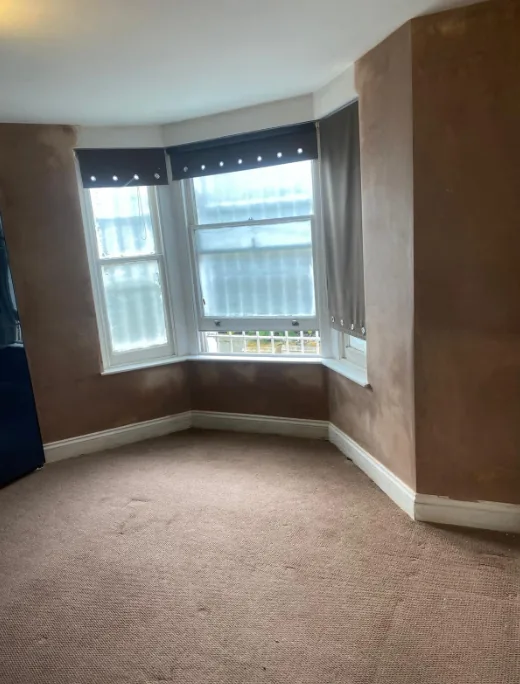
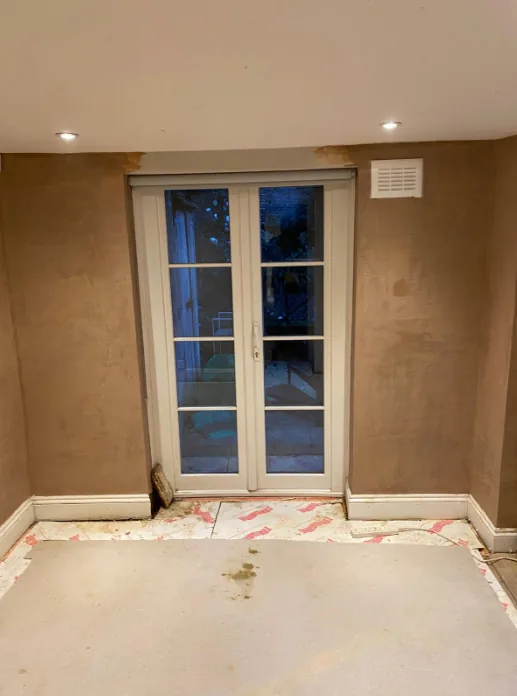
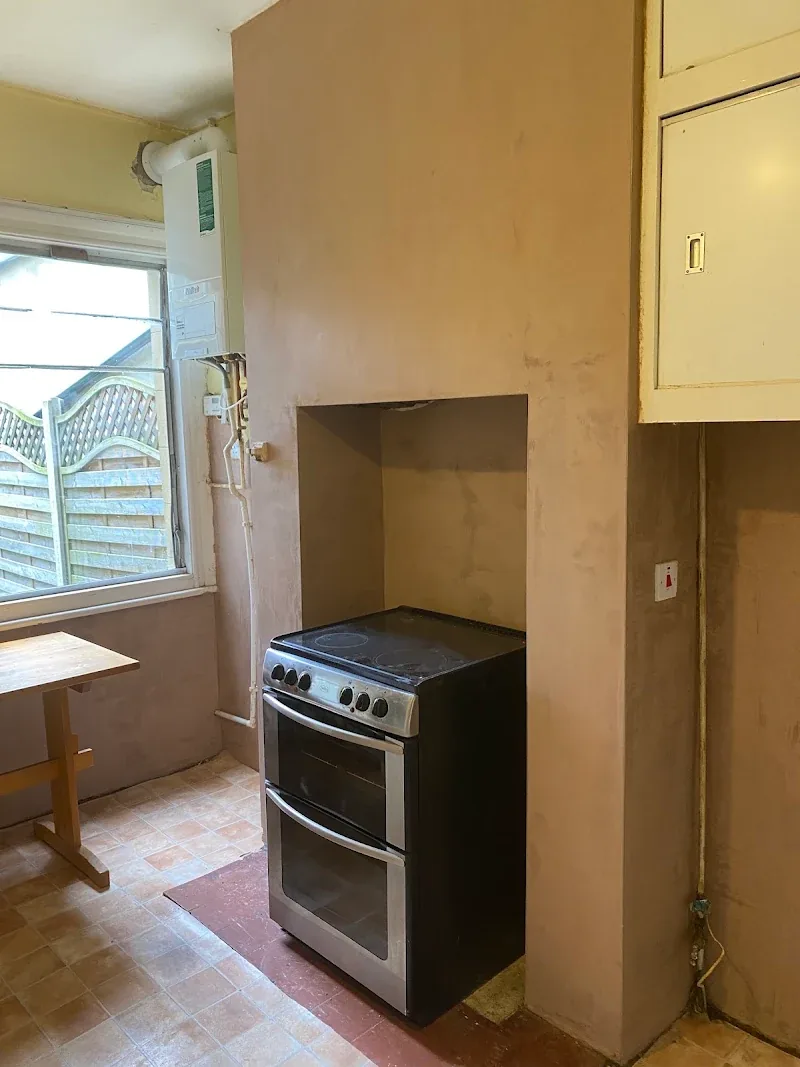
When a wall is hacked back for damp work, the new plaster goes all the way up rather than stopping at a metre. A patch in the middle of a wall shows through paint forever, however well it is feathered, because the two surfaces never take emulsion the same way.
So the standard on every damp job here is a full wall, skimmed to a smooth finish up to ceiling level, ready for decorating. Skirtings back on, sockets refitted, floors swept.
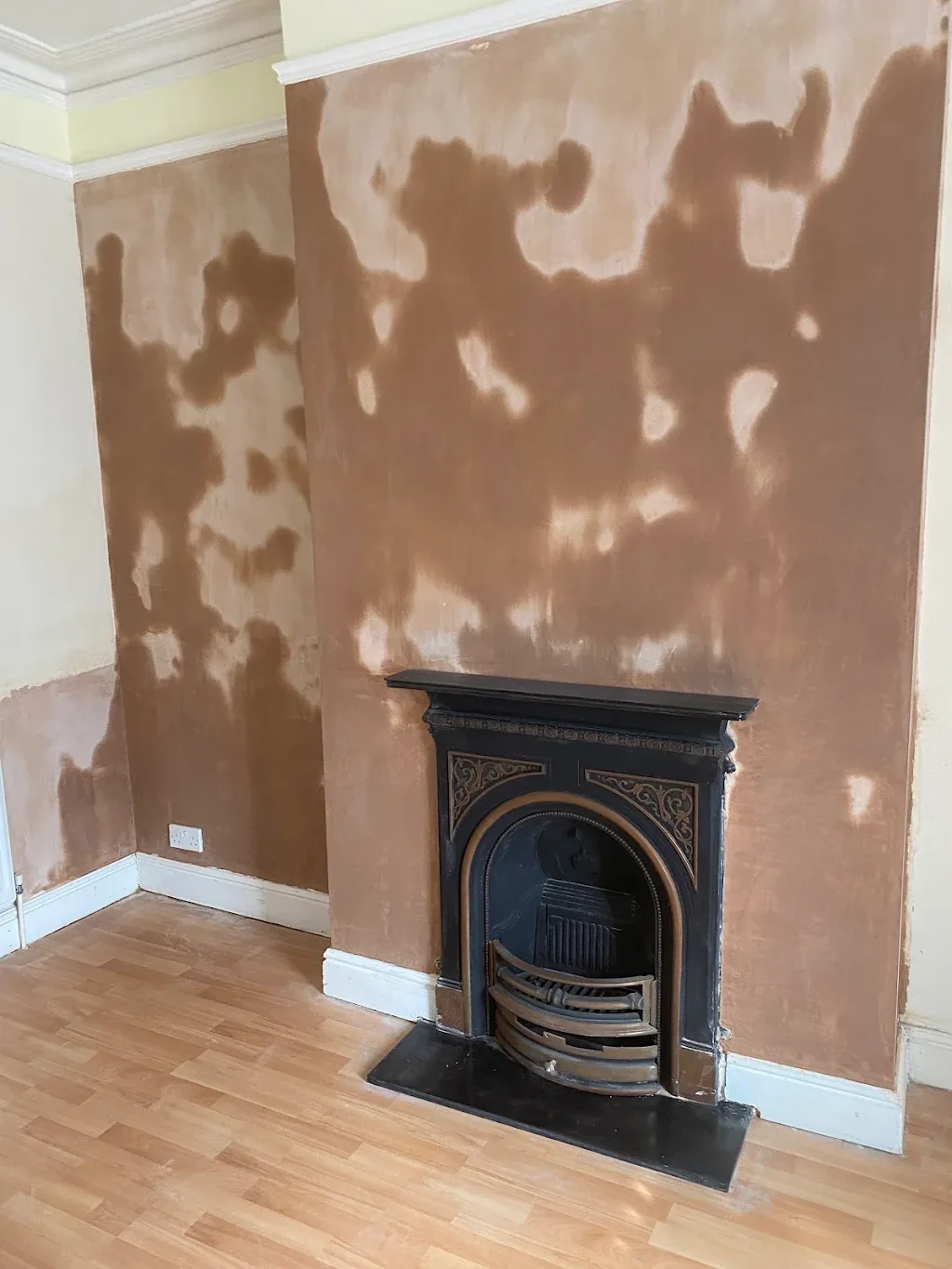
Give it time before you paint. New plaster wants a few weeks, and the first coat should be a watered-down mist coat. Full-strength emulsion straight onto fresh plaster peels.
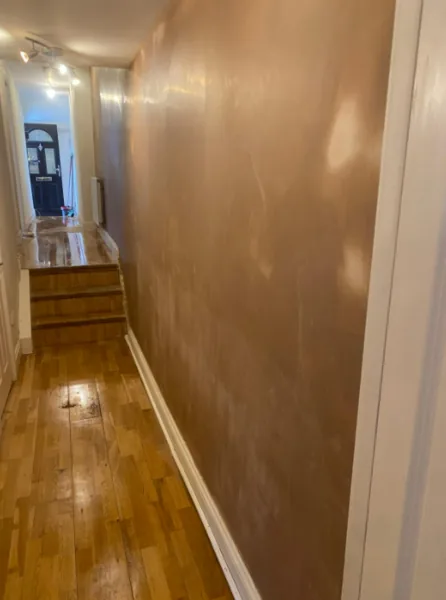
Skimming and re-plastering
Skimming is a thin finish coat over a wall that is already sound — tired artex, lining paper that has torn out chunks, a patchwork of old repairs, or new plasterboard. Re-plastering is the full job: a backing coat built out to bring the wall flat, then the finish over the top. Bare brick, a chimney breast taken out, or plaster that has blown all need the second one.
Dry lining and screeding
Plasterboard on a timber or metal frame where a wall is too far gone to build out in wet plaster, or where insulation is going in behind. Screeding for floors, usually after a floor has been up for damp or joist work.
Waterproof rendering
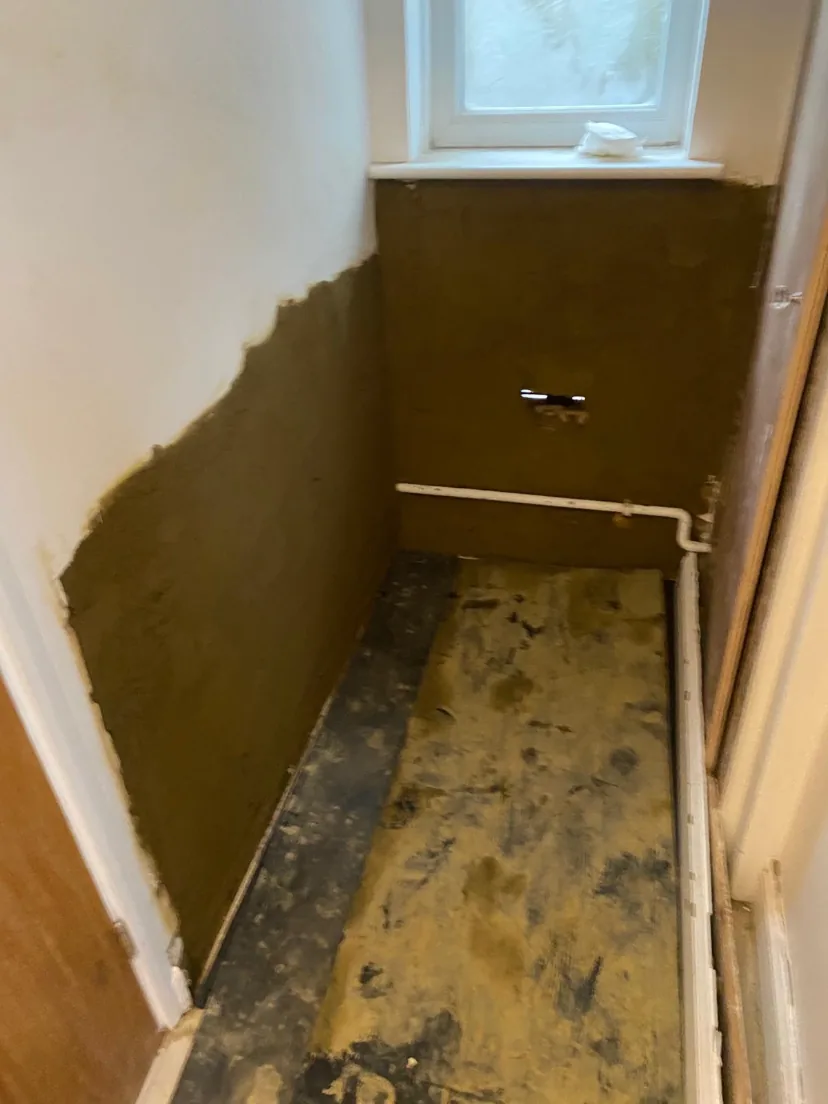
Two coats of sand and cement with a waterproofer. Inside, it is what goes on after a new damp course, holding back the salts and residual moisture so they never reach the finish coat. Outside, it is a wall that takes the weather — a gable end, a side return, a bay that has lost its render.
Outside render is also where penetrating damp usually starts. A hollow patch, a crack, or render carried down over the damp course all put water into a wall, so the render is checked on every penetrating damp survey.
Timber, skirtings and making good
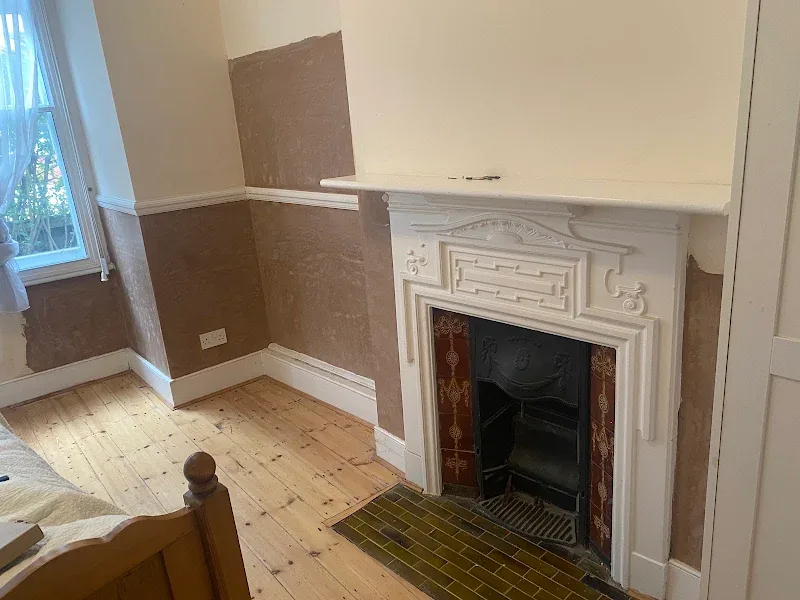
Skirtings off and back on, rotten lengths replaced, door frames and sills made good where damp has taken them, and sockets and radiators refitted. It is the part that decides whether a job looks finished or looks like a repair.
Free estimate
Send a photo of the wall. You will get an honest answer.
Most damp is diagnosed from a photograph of the wall and the skirting before anyone comes out. If it turns out to be condensation and you need ventilation rather than a damp course, we will tell you that.
Call the office
020 8251 9702